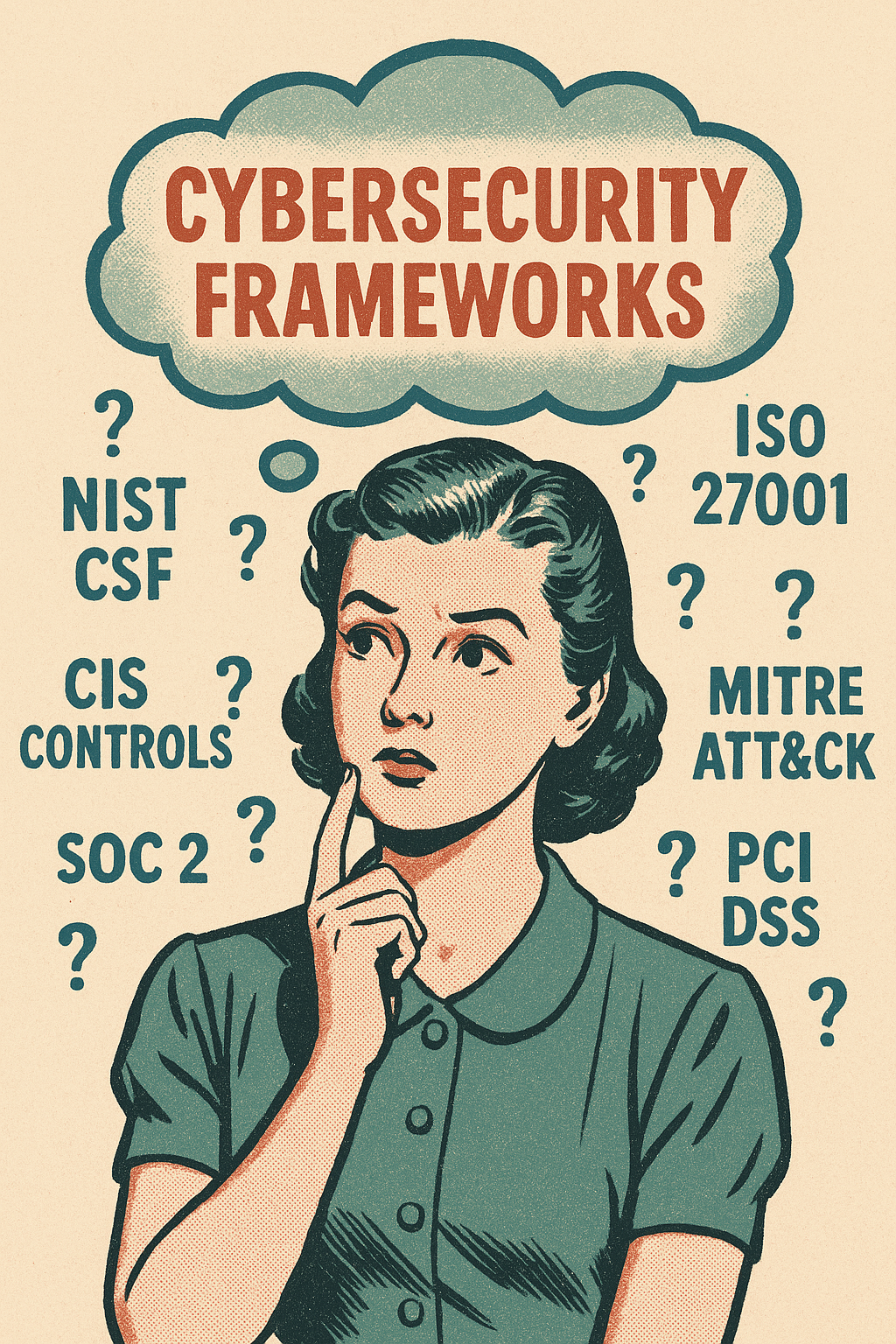
Google "cybersecurity frameworks" and you're hit with a wall of alphabet soup —NIST CSF, ISO 27001, CIS Controls, MITRE ATT&CK, SOC 2, COBIT, PCI DSS. Overwhelming? Definitely.
You might think you need to learn them all right away to get hired. But that’s like trying to drink from a fire hose...just don’t.
The Big Secret: Frameworks = Cousins
Here’s what the pros know: most frameworks are different flavors of the same thing. Think of them as cousins at Thanksgiving; different styles, same DNA.
For example:
- NIST CSF has Identify, Protect, Detect, Respond, Recover.
- ISO 27001 follows a Plan-Do-Check-Act cycle.
- CIS Controls and NIST 800-53 tackle the same problems with different layouts.
Pick Your Framework
Don’t speed-date them all. Commit to one and really get to know it:
- NIST CSF – Friendly and beginner-friendly. Clear structure.
- MITRE ATT&CK – Great if you're into threat intel or red teaming.
- ISO 27001 – Formal and global. Big on documentation.
- CIS Controls – Practical, action-oriented, great for hands-on learners.
Once you’ve picked one:
- Read the official docs (yes, ALL of it)
- Look for real-world examples
- Try mapping one to your school/job’s security framework
- Join forums and communities
- Consider a certification (eventually)
Learn to Translate
As you gain experience, you’ll see overlaps. “COBIT 5.3” becomes “NIST AC family” becomes “CIS Control 6.” Like learning Spanish makes Italian easier, one framework unlocks others.
This skill is framework fluency. It lets you:
- Understand any org’s security posture
- Speak across teams and stakeholders
- Adapt to new frameworks as they emerge
What Employers Really Want
You don’t need to master every framework. What stands out is:
- Depth in one
- Understanding of how frameworks connect
- Real-world application
- Curiosity about the “why” behind controls
Most job descriptions will mention at least one framework, simply because organizations love using them as their security blueprint. By getting cozy with these frameworks, you'll not only boost your chances of landing the gig but also show potential employers that you know your way around the industry's best practices. So, when in doubt, pick a framework and dive in.
TL;DR: Don’t panic. Pick one. Go deep. Learn to map and translate. That’s your path into cybersecurity. ...and get really good at Excel. You'll thank me later
Note: This is a guest post by an old friend and former colleague, Tony Nelson.
Thanks for reading Cyber Sherpas! Subscribe for free to receive new posts and support my work.

Member discussion: